The Journey of Claire Hill
Sophomore tennis player Claire Hill came to UNC with big dreams and even bigger expectations. Raised in Cary, North Carolina, Claire committed to Chapel Hill incredibly early in her high school career. Hill was so ready to join the team that she graduated a semester early to become a Tar Heel in the spring of 2025. Even with her early arrival and strong start, Claire faced one of the toughest moments of her athletic career last season. After losing the first clinching match against Virginia, she struggled mentally with confidence, pressure, and the feeling that she had let her team down and everyone else around her.
This digital story explores how Claire learned to overcome setbacks, stay mentally strong, and find inspiration in her teammates, coaches, and UNC’s culture.

Hear from Claire herself:
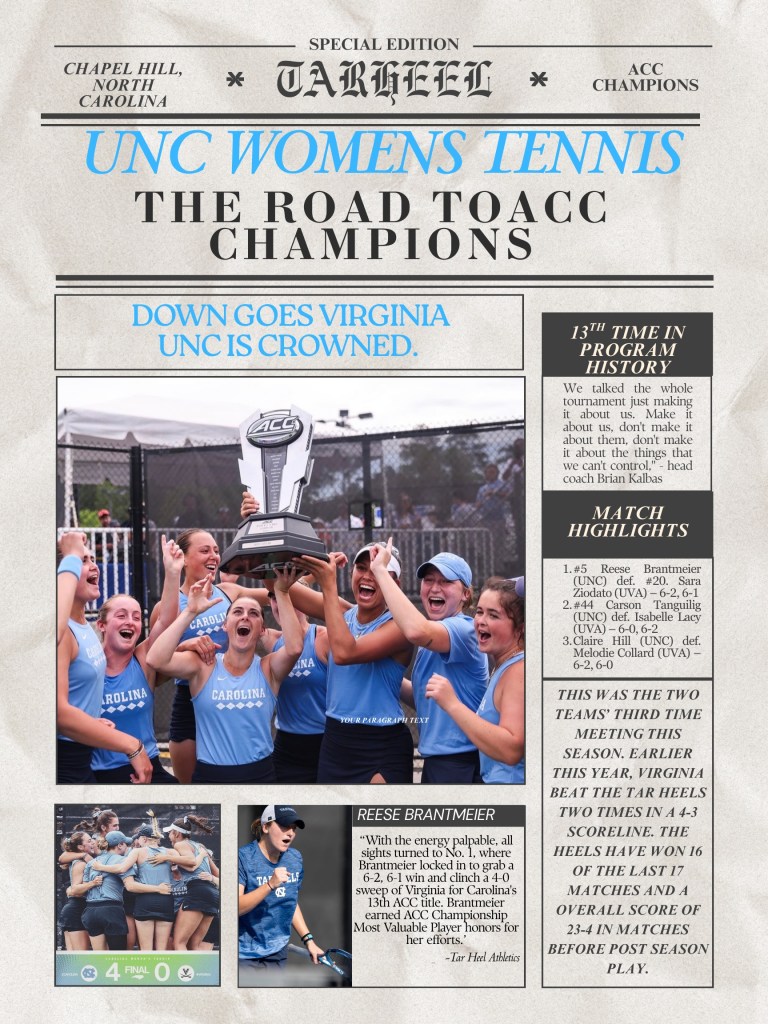
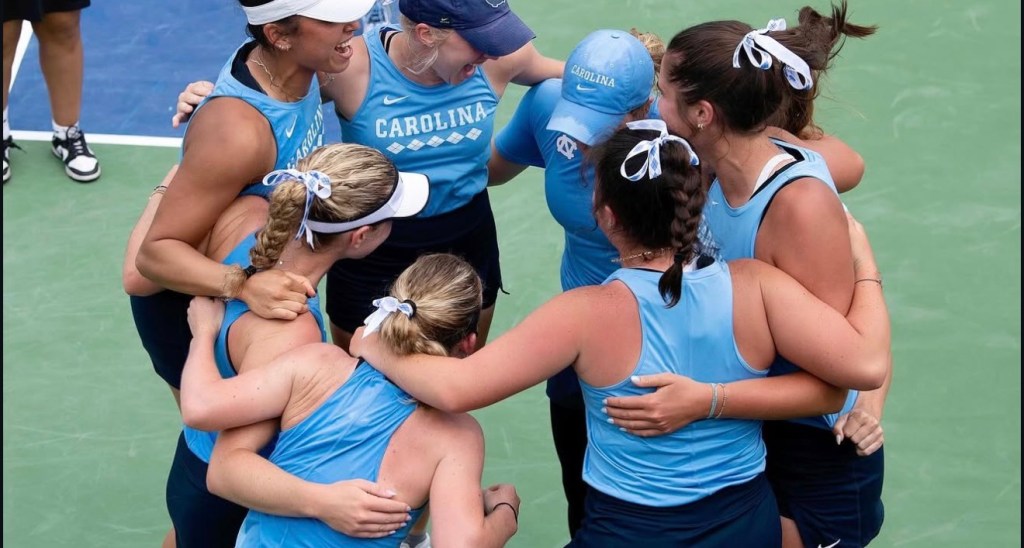
“I am more than proud to represent this team and put on this uniform. When moments are tough, I remember I am playing for these girls next to me.”
-Claire Hill
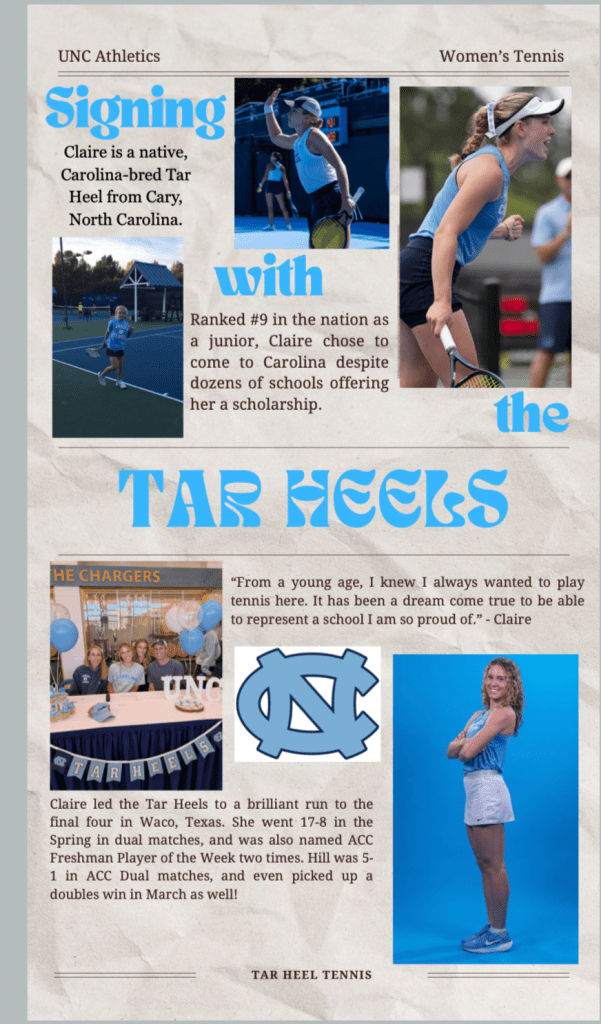
The Inside of College Athletics
College athletics often look glamorous from the outside. The national rankings, high-stakes competition, photo shoots, and the gear in Carolina blue. The reality is mentally demanding. Athletes tend to carry heavy expectations from coaches and family, which puts an enormous amount of stress on themselves.
For Claire, the pressure hit hardest after one defining match. Instead of letting that moment define her, she used it as a turning point. She leaned on her teammates, trusted the coaching staff, and rebuilt her confidence through daily work, honest conversations, and resetting her mindset.
What You Should Know
Claire’s experience reflects a larger truth across college athletics: even the strongest athletes can question their purpose when pressure peaks. After losing the clinching match against Virginia, Claire didn’t just struggle with performance, she struggled with identity, confidence, and the fear of letting others down.
Why: In moments like this, leaders in college sports emphasize the importance of reconnecting with one’s “why.” Toledo Athletic Director Bryan Blair explains that much of burnout and disengagement “comes back to our why… If we as leaders are aligned with our institutional mission and our personal why – not just chasing revenue or wins – we can keep ourselves and our people grounded in the purpose of transforming lives.” For Claire, regaining her confidence meant remembering why she plays, which is for the love of the sport, her teammates, and the commitment she made to herself before she stepped on campus.
Less than 1% of high school tennis players go on to play at the NCAA Division 1 level. A fraction of these athletes earn a fullride scholarship.
A 2019 research study revealed that approximately 35% of elite athletes experience mental health issues, with the most commonly reported problems being burnout, anxiety, and depression.
These athletes work under tremendous pressure and often encounter unrealistic expectations from coaches, teammates, fans, and themselves. The constant drive for perfection can significantly impact their mental well-being.
In addition to these pressures, athletes must juggle personal obligations while fulfilling their sports commitments.
Mental health challenges can affect individuals at any point in their lives, but athletes face distinct stressors that can increase their susceptibility to mental health disorders.
Meet the Team
UNC Women’s Tennis 2025-2026 Roster

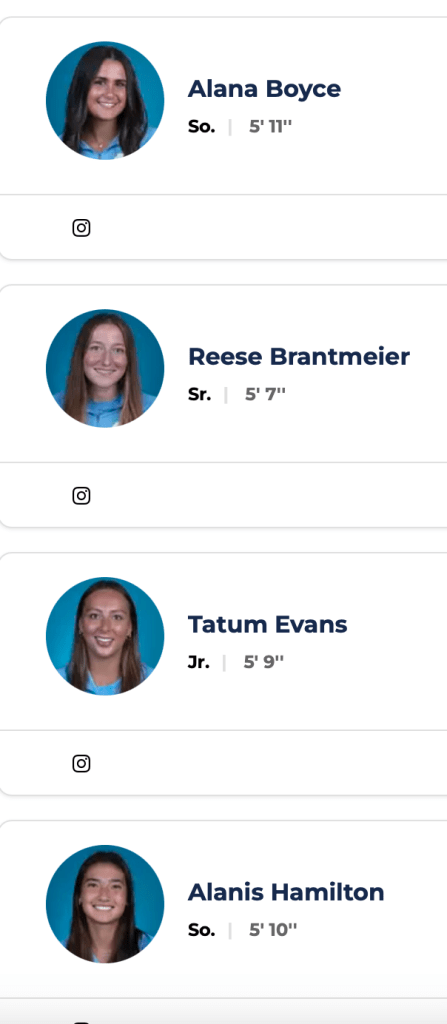
Introducing the UNC Women’s Tennis 2025-2026 roster, featuring standout players like Claire Hill.
Sources
“D1 Administrative Burnout, Exhaustion & Disengagement, Part 3: Now What?” Athletic Director U, https://athleticdirectoru.com/, 22 Oct. 2025, athleticdirectoru.com/articles/d1-administrative-burnout-exhaustion-disengagement-part-3-qualitative-analysis-2025-3/.
Kovacs, Mark S, et al. “Physical Performance Changes after Unsupervised Training during the Autumn/Spring Semester Break in Competitive Tennis Players.” British Journal of Sports Medicine, U.S. National Library of Medicine, Nov. 2007, pmc.ncbi.nlm.nih.gov/articles/PMC2465299/.
“Strength Isn’t Just Physical: Exploring Athletes’ Mental Health.” Athletes and Mental Health: Pressure Behind the Performance, 17 Oct. 2025, deconstructingstigma.org/guides/athlete-mh.
 Site Title